RSSB logo
Menu
Register
  • RSSB logo
  • Ask RSSB
  • About RSSB
    • About Us
      Who We Are
      What We Do
    • Insights and News
      • RSSB Podcast
    • Groups and Committees
      Career Opportunities
      • Employee Wellbeing
    • Member Enquiries
  • Services and Resources
    • Case Study Library
    • Events and Webinars
    • Consultancy
      Training
    • Railway Documentation and Drawing Services
      Railway Industry Supplier Approval Scheme
      • Customer testimonials
    • Research Catalogue
      Standards Catalogue
  • Safety and Health
    • The Rail Health and Safety Strategy
      Safety Risk Groups
      Train Protection Strategy
      Wellbeing Groups
    • Asset Integrity
      Fatigue
      Freight Safety
      • Freight Precursor Indicator Model
    • Health and Wellbeing
      Level Crossings
      Occupational Health and Safety
      • Welfare Facilities Charter
      • Welfare facilities: Initiatives to improve access
      • Welfare facilities research and trials
    • Passenger Operations
      Passenger and Staff Assaults
      Train Operations
    • Trespass and Suicide
      Safety and Health Tools & Resources
      Common Solutions
  • Standards
    • Types of standards and how they work
      • National Technical Specification Notice guidance
      Defining the future of standards
      • Rail Standards Strategy
      • Railway Standards Code and Standards Manual
    • Using standards
      • Latest updates to standards
      Standards self-assessments
      Rail Standards Consultations
    • Where we use rail standards
      • Control, command and signalling
      • Data, systems and telematics
      • Energy
      • Infrastructure
      • Plant
      • Rolling stock
      • Traffic operation and management
    • Standards groups and committees
      Digital Railway Assurance Steering Group
    • Standards Catalogue
      Rule Book App
      Subscribe to Standards News
  • Sustainability
    • Sustainable Rail Blueprint
    • Net zero carbon rail
      • Carbon reduction
      • Your guide to carbon accounting
      A quieter railway
      Clean Air
    • Prepared for a Changing Climate
      • Climate change adaptation metrics
      A Railway for Nature
      Zero Waste
      Protect and Conserve Water
    • Maximising Social Value
      Rail at the Heart of Communities
      Careers, Economy & Sustainable Growth
      People-centred Rail
    • Sustainability Tools and Resources
      Sustainable Rail Groups
  • Research
    • About the Research Programme
      Engage with the Research Programme
    • How Research Delivers Benefits
      Collaboration in Research
      • World Congress in Rail Research
    • Flagship Research Activities
      • Adhesion
      • Artificial Intelligence
      • Freight Research Programme
      • Performance
    • Research Highlights - Winter 2026
      Rail Technical Strategy
    • Research Catalogue
      SPARK
  • Join RSSB
    • Join RSSB
    • International RSSB
      Becoming a Member - GB and Overseas
    • Find out Who Joins RSSB and Why
    • What our members and affiliates say
    • Membership Benefits
      Membership Offerings
      Our Business Plan
Register
  • RSSB
  • Sustainability
  • Net zero carbon rail

Net zero carbon rail

Supporting a net zero economy

Rail is one of the most carbon efficient means of transport, but there is still significant room for improvement. Decarbonising involves reducing, and ultimately eliminating carbon dioxide emissions.

Decarbonising rail and increasing its use – both passenger and freight – will be a big step towards fulfilling the UK’s commitment to net zero. Together with industry we are co-creating the Sustainable Rail Blueprint to lead the industry in achieving this goal and ensure the railways continue to be one of the lowest carbon transport options for passengers and freight.

Here we provide information to help you manage and monitor carbon emissions and ensure efforts are targeted effectively.

Decarbonisation topics

Carbon reduction
Collected research and methods to target and reduce greenhouse gas reductions in energy, traction power, and infrastructure.
Your guide to carbon accounting
Methods for annual carbon accounting for rail organisations including passenger and freight operators, rolling stock companies, and infrastructure managers.
Carbon data collection and reporting
Quantifying greenhouse gas (GHG) emissions is a key step in tracking and reducing them. Learn about collecting and reporting GHG data in the value chain.
Sustainable Rail Blueprint
The Sustainable Rail Blueprint is the industry-wide strategy for sustainability. Learn what GB rail’s goals are for net zero carbon, as set out within the Blueprint.
Rail Carbon Tool
The Rail Carbon Tool is a web-based carbon reduction tool for organisations and companies to develop an understanding of their carbon footprint so they can go on and reduce it throughout their supply chains.
Sustainability tools and resources
Helping organisations measure and improve their environmental performance
The DECARB Programme
Learn about RSSB’s DECARB programme which covers three key areas. Traction, Infrastructure and Governance.
Transport Decarbonisation Plan
Learn about how the industry is committed to pursuing a net zero carbon railway and the steps being to achieve this.
Decarbonisation our final report to the Rail Minister
Britain is leading the world on setting clear targets to reduce carbon. This report includes an economic appraisal and a route map for delivery a low carbon railway.
Decarb Working Group
The Decarb Working Group leads, oversees and guides the industry in contributing to the government’s net-zero emissions target by 2050. The group will also define the strategic approach for the rail industry.
 

Sustainability tools and services

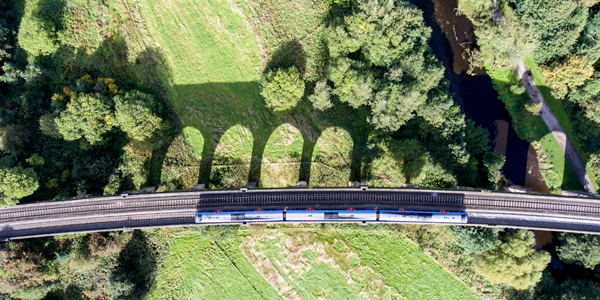
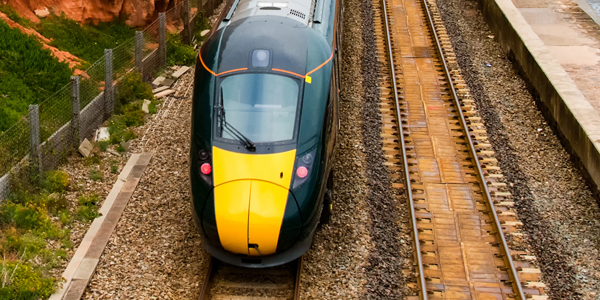
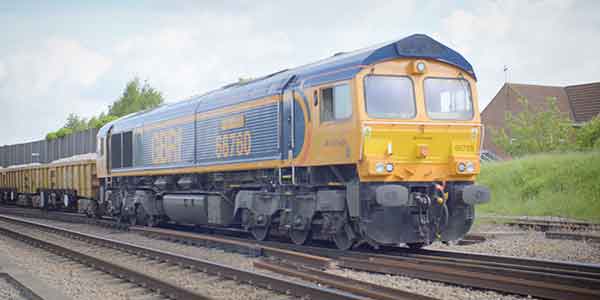
Three merged images of freight train, passenger train and overhead electrified lines

Sustainability tools and resources

Helping organisations measure and improve their environmental performance
Read more
Social Value promo image

Rail consultancy: environmental and social sustainability

Rail is already the most sustainable mode of transport. However, we need to go further and faster as government policies and society’s expectations change, and other modes of transport catch up. Our rail consultancy services for environmental and social sustainability combine insights and expertise to provide independent support about these topics. We help you keep rail greener than other transport modes.
Learn more
Anonymous crowd

Training courses

Our training courses reflects the knowledge and skills needs of the industry and is based on our rail expertise.
Read more
sustainable development case studies introduction banner promo

Sustainable development case studies

Explore case studies that illustrate how rail sustainable development principles are being effectively implemented throughout the industry.
Read more
View lessView all

More resources

Abstract carbon

Key Decarb reports

Access numerous research projects looking at rail carbon emissions, many of which are part of our DECARB programme. Here we provide the list of projects in our research catalogue.
Read more
freight-promo-image-5

RSSB – Carbon Reduction Plan

Find out how RSSB is committed to achieving Net Zero emissions by 2050.
Read more
View lessView all
Haven’t found what you’re looking for?
Get in touch with our expert for more information
Noah Myers
Noah Myers
noah.myers@rssb.co.uk
Other RSSB sites
Standards Consultations
CIRAS
RISAS
RISQS
SPARK
Catalogues
Research Catalogue
Standards Catalogue
Policies & Statements
RSSB’s Gender & Ethnicity Pay Gap
Accessibility Statement
Contact us
Customer Portal
© 2026 Rail Safety and Standards Board Ltd All Rights Reserved Rail Safety and Standards Board Ltd is Registered in England under company number 04655675
Cookie Policy
Privacy Notice
Terms of Service