Human Factors Case Studies
-
Passenger Seat Comfort
Seat comfort is no longer considered a luxury to passengers, rather a requirement which influences the overall passenger experience on our railways. The challenge is that seat comfort is multi-faceted, depends on the person, the context and the environment. Consequently, what is comfortable for one person may not be comfortable for another, and what is comfortable for an individual may change over time. This emphasises the importance of a holistic human factors (HF) approach in identifying seat comfort.
RSSB and Arup led a project that led to the development of a robust seat comfort selection assessment. In the first phase of this work, the key influencers of comfort were identified. This involved seat parameters (e.g. seat width), seat pad thickness and compression, first impressions of comfort (psychological), seat accessories (e.g. armrests) and the length of the journey.
In the second phase the importance of each factor in achieving various levels of comfort were tested. Various trials and questionnaires were conducted with a diverse population to test the scoring of the seat parameters. The finalised seat comfort assessment was produced through further refinements of the parameters based on subjective comfort scores. The confirmed assessment was validated by comparing objective seat comfort scores (obtained through the seat comfort assessment), with subjective comfort scores (given by participants) for existing rail seats.
This led to a seat comfort specification for manufacturers with a set of minimum requirements, allowing comfort to be properly considered as an essential feature, alongside other needs such as crashworthiness and fire safety. This could help all organisations involved in rolling stock procurement and is testament to the HF approach utilised in this project.
-
Cognitive Underload
As a task, driving trains has been affected by many changes over the years. Train cabs have been designed to minimise visual and auditory distractions, in-cab environments are more comfortable and train traction systems are smoother. The introduction of systems such as the European Rail Traffic Management System (ERTMS) and Automatic Train Operation (ATO) allows train driving tasks such as speed control and braking to be automatically controlled. These conditions can lead to a state of cognitive underload, which occurs when an individual’s mental workload is too low, their arousal levels drop, and performance suffers.
For many years, the rail industry has known that high mental or physical workload (overload) can cause people to make mistakes. However, there has been very little recognition of what happens at times when workload is low (underload). To prevent incidents involving underload from occurring, it’s important that train drivers can actively monitor and respond to their surroundings when required. RSSB’s HF specialists recently led a research project to identify mitigation strategies to counter cognitive underload in train drivers. The project aimed to produce practical techniques for the GB rail industry to implement.
The project implemented HF methodology which was split into two phases. The first phase of the project included:
- a literature review which identified potential alertness maintaining techniques in recent literature
- train driver workshops which identified novel techniques that train drivers use to mitigate underload
- a workshop which validated the techniques identified in the literature review and driver workshops.
The findings from the first project phase pointed towards the creation of a toolbox of mitigation techniques that drivers could use to self-manage their workload levels.
The second phase of the project developed the underload toolbox and then evaluated its acceptance. The evaluation involved briefing drivers on techniques from two case study companies and then evaluating driver feedback after a six-week trial period.
Overall, the project found that underload is a real issue in the rail industry. The workshops and briefings showed that most drivers experience underload on a regular basis. Feedback from the toolbox evaluation identified that the toolbox briefings helped improve awareness of the issue and drivers found the techniques effective in managing their own workload.
"The Underload toolbox has helped me feel better equipped to manage underload day to day, I think about underload more now. If I am struggling, I would use the techniques. I think the toolbox is good, clear, concise and easy to read."
Train Driver, LNER
By taking a system approach to tackling the issue of underload, this project has delivered a suitable output that considers both the benefits and risks of a variety of mitigation techniques. Through collaboration with key personnel in different roles, the toolbox has been created to be accessible for all drivers—created by drivers for drivers—to ensure that good practice is shared throughout the industry. It is important that all levels within organisations, from directors to the front line, appreciate the importance of managing underload.
-
Integrating Human Factors and Non-Technical Skills in Alstom
The challenge
Alstom wanted to reduce and prevent product and operational safety incidents from occurring or re-occurring. To do this, they needed to understand the underlying causes of these incidents.
Integrating human factors
To help Alstom understand and identify underlying causes, RSSB introduced Alstom to the 10 Incident Factors, and provided supporting information and examples to help them understand and implement the factors. RSSB Human Factors specialists also attended and supported Alstom’s national safety days dedicated to reviewing and assessing the 10 incidents factors.
Using these 10 incident factors, Alstom analysed their data and identified issues around non-technical skills (NTS) in the human contribution to their incidents. The priority areas were around their practices and processes, and communications (see table).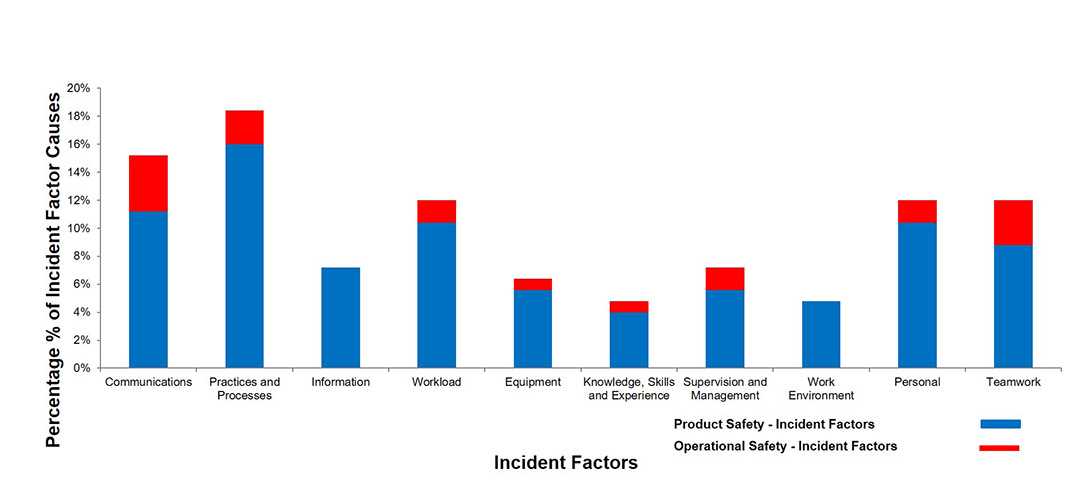
Integrating non-technical skills
Alstom created and implemented an NTS integration programme with support from RSSB. For the programme to be successful, Alstom knew they needed commitment from senior management. Alstom’s Head of Railway Safety Mark Kenwright delivered a presentation with RSSB to the Alstom UK&I board to set out the rationale for the programme and the benefits that NTS could bring Alstom in improved performance and reduced costs.
This presentation and subsequent discussion led to a clear commitment by the board for the programme. The programme is now being rolled out across Alstom. It includes:
- A steering group to oversee NTS integration activity across the business
- Front line staff training on NTS, using the RSSB NTS e-learning course
- A video featuring senior management, front line staff, trainers and RSSB Principal Human Factors Specialist Paul Leach, setting out the vision for the programme, why it is needed and the benefits it can bring.
- Supporting front line staff, helping them apply their NTS in their duties
- Identifying how NTS can be implemented into a range of maintenance activities, including shift briefs and work instructions.
RSSB provided support to Alstom by:
- Delivering face to face and virtual NTS training to Alstom trainers
- Reviewing the Alstom front line staff training package so that the trainers felt comfortable delivering the content
- Providing access to the RSSB NTS e-learning course to support the front-line training
- Facilitating the use of the RSSB Risk Based Training Needs Analysis to help the trainers identify how NTS related to technical maintenance tasks and the core NTS to focus on
- Taking part in the Alstom NTS video to provide a short concise explanation of what NTS are and how they can benefit front line staff
- Providing advice on how to effectively integrate NTS, including on mobilising the steering group.
Benefits
Expected and perceived benefits from integrating HF and NTS within the maintenance operation include:
- The 10 incidents factors being a driver for change by helping to identify underlying causes of incidents
- Changes in behaviour in how staff approach their maintenance tasks, with greater appreciation and consideration of risk and human error
- Ultimately, a reduction in product and operational safety incidents.
Where to find more information
- The 10 Incident Factors, including explanation of each factors
- RSSB guidance on integrating non-technical skills
- RSSB non-technical skills training courses
- RSSB Human Factors training courses
- RSSB training course on the risk based training needs analysis toolkit